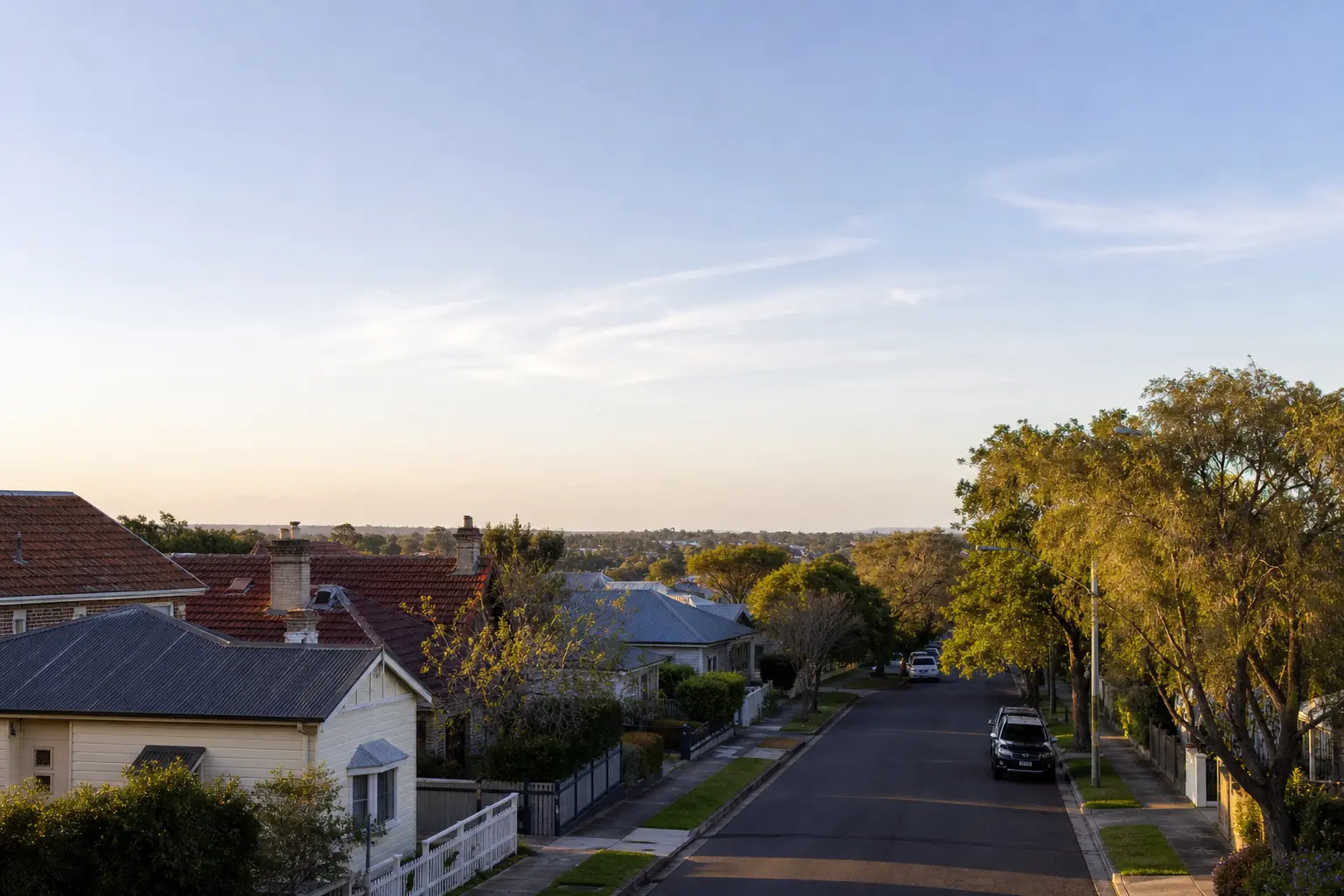
Drive through almost any Newcastle suburb and you will see both: concrete and terracotta tile on one house, Colorbond steel on the next. If you are building, extending or replacing a worn roof, the choice between them matters for decades. This guide sets out what Colorbond steel does well, where tile still makes sense, and the local conditions worth thinking about before you decide.
Colorbond and Lysaght are among our supply partners, so we work with their products regularly. The aim here is to explain the trade-offs plainly, not to push every roof towards steel.
What Colorbond roofing actually is
Colorbond is a brand of prepainted steel made in Australia by BlueScope. The steel carries a metallic coating for corrosion protection, then a primer and a baked paint finish. It is rolled into roof sheet profiles by manufacturers such as Lysaght, whose profiles include the traditional corrugated Custom Orb and concealed fix profiles such as Klip-Lok. So when people talk about a Colorbond roof, they usually mean the steel, and the profile is a separate choice.
The main benefits
It is light
A steel roof weighs far less than a tile roof over the same area. That puts less load on the frame, which is one reason steel is popular for extensions, second storeys and re-roofing older homes where the frame is carrying its age. Whether a particular frame suits a change of material is something to check on the day, but lightness gives you more options.
Fewer places for water to get in
A tile roof relies on hundreds of overlapping tiles and on mortar and pointing along every ridge and hip. A steel roof uses long sheets, often running from ridge to gutter in one length, with metal ridge capping screwed down rather than bedded in mortar. There is simply less to crack, slip or wear out, and no ridge pointing to maintain.
It handles low pitches
Many steel profiles can be laid at much lower pitches than tile. That makes steel the usual choice for skillion roofs, patios and additions that need to tuck under an existing roofline.
Lower maintenance, not no maintenance
Steel does not grow lichen the way tile does and never needs rebedding. It still benefits from clean gutters, and the manufacturer recommends washing areas that rain does not reach, such as under eaves and overhangs. Salt and grime that sit on those areas can shorten the life of the finish.
Colour and heat
The Colorbond range covers a wide spread of colours, from pale greys to near black. Lighter colours generally absorb less heat than dark ones, which can make a difference to roof space temperature in summer. Some estates and councils have rules on roof colour or reflectivity, so check before you commit.
Rainwater collection
Steel roofs are widely used to collect rainwater for tanks. If you plan to drink tank water, check the manufacturer's current guidance and make sure flashings, sealants and any other materials on the roof are suitable too.
Where tile still has the edge
- Character and heritage: on a Federation home or an older terrace, terracotta or slate may be part of what makes the house what it is. Changing the roof material on a heritage listed home or in a heritage conservation area may need council approval, and in some cases the answer will be no.
- Rain noise: tile is quieter in heavy rain. A steel roof with a sarking or insulation blanket underneath is much quieter than bare sheets over battens, but it will not sound the same as tile.
- Existing roof in good condition: if your tiles are sound, restoring them is usually a smaller job than replacing the roof. A tired tile roof is not by itself a reason to switch to steel.
Hail and storms
Neither material is immune. Severe hail can dent steel sheets and can crack tiles. The difference is in what happens next: a dented sheet usually stays watertight, while a cracked tile can let water in. In strong wind, both materials depend heavily on correct fixing. Screw spacing on steel and tile fixing and ridge bedding on tile are what keep a roof on in a storm, which is why installation quality matters as much as material.
Coastal homes: choose the right grade
This is where Newcastle homes need more care than most. Salt carried inland from the ocean and the harbour attacks metal, and how much depends on how close the house is to breaking surf or salt water, how exposed it is and which way the prevailing winds blow.
BlueScope publishes environment guidance that matches products to exposure. As general manufacturer guidance, the standard Colorbond steel suits most environments, while Colorbond Ultra steel is intended for more severe marine exposure. There are also options for very severe coastal sites. The distances and categories are set by the manufacturer and can change, so check BlueScope's current environment guide against your own distance from the coast before choosing a product. We can help you work through it at the inspection.
The grade of the sheets is only part of it. Screws, flashings, gutters and downpipes need to be compatible with the sheet and suited to the same exposure. Mixing incompatible metals, or letting water run off copper or lead onto steel, can cause corrosion that the sheet itself would have resisted.
What about cost?
A metal roof is not automatically cheaper than tile. The price of a new or replacement roof depends on its size, pitch and access, the profile and grade chosen, how much of the existing roof must come off, and whether sarking, insulation, new flashings or new gutters are included. The fair comparison is two written quotes for the same roof with the scope set out line by line.
If you already have a Colorbond roof that has faded or shows surface rust, restoration may be an option before replacement. A September 2026 Newcastle market guide puts most metal roof restorations between $2,850 and $5,700, covering cleaning, rust treatment and recoating. Those are modelled estimates, not our quotes. Sheets rusted right through need replacing, and the exact price for your roof is confirmed in writing after a free on-site inspection.
When Colorbond is the right call
- You are adding an extension, second storey or patio, particularly at a low pitch.
- Your tile roof is past restoring and you want a lighter replacement.
- Your existing metal roof is rusted through in many places.
- You want a roof with no ridge mortar or pointing to maintain.
- You are building new and like the look.
It may not be the right call if the home is heritage protected, if the existing tile roof is sound, or if the character of the house depends on its current roof.
Talk it through on site
The best way to decide is to look at your actual roof. Our metal roofing page covers Colorbond and Lysaght profiles in more detail, and our roof replacement and new roofs pages explain how each job runs. If your current roof may only need work rather than replacing, see roof restoration.
We offer a free on-site inspection and a free quote, with the scope and price in writing, and our workmanship carries a 10-year workmanship warranty. Call (02) 4047 0860 or get in touch to book.