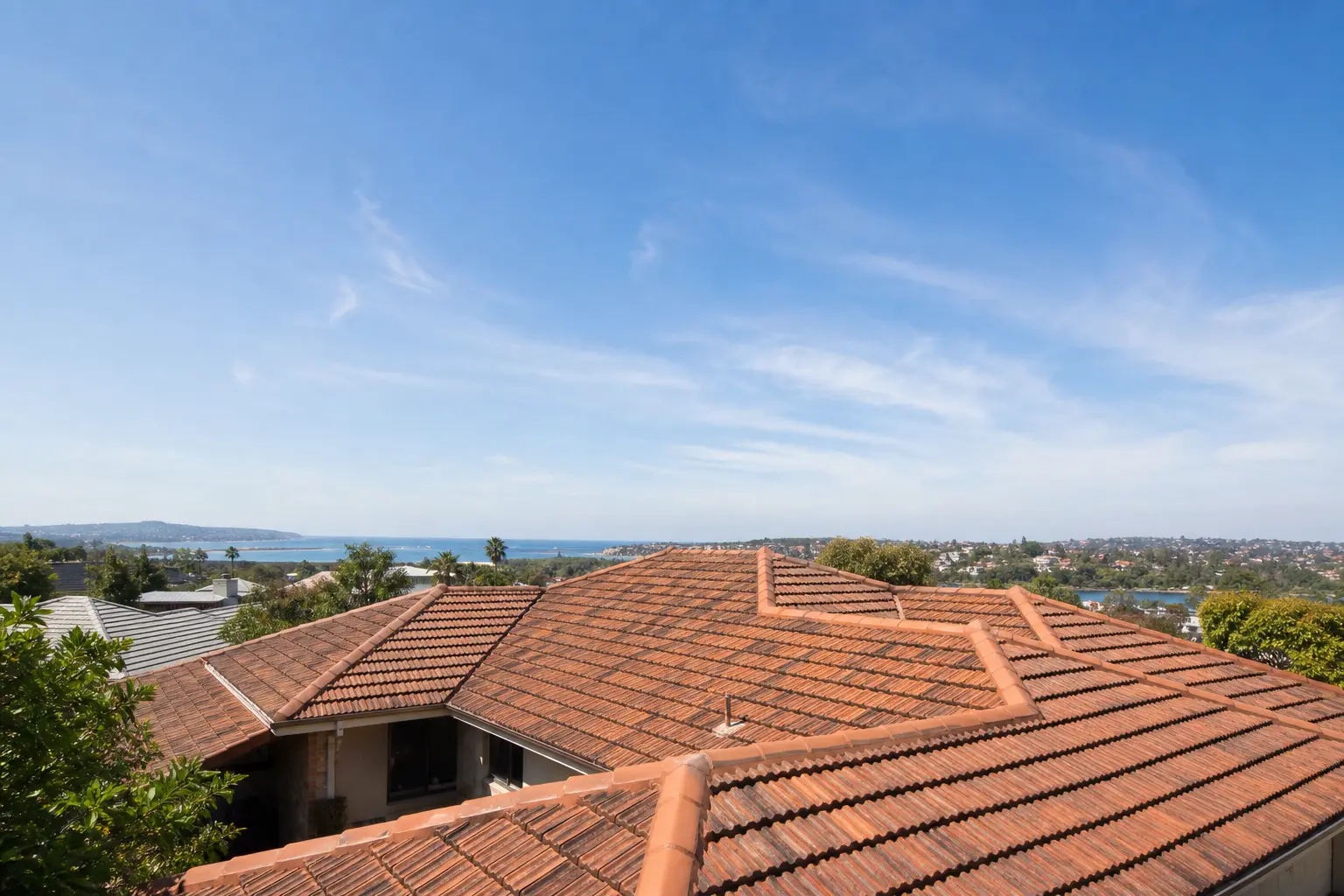
Tile and Metal Roof Restoration Newcastle
Roof restoration brings a tired but structurally sound roof back into good working order. On a tile roof that means cleaning, replacing broken tiles, rebedding and repointing the ridges, then coating. On a metal roof it means cleaning, treating rust, replacing worn fixings and recoating. It suits Newcastle homes where the tiles or sheets still have plenty of life in them but the mortar, fixings and finish do not. Every job starts with a free on-site inspection, and we tell you plainly whether restoration, a smaller repair or a replacement is the better use of your money.
- 🛡️ 10-Year Workmanship Warranty
- 📍 Local Newcastle NSW Team
What's Included
- Roof inspection and written scope
- Cleaning and surface preparation
- Broken tile and fixing replacement
- Ridge capping rebedding and repointing
- Rust treatment on metal roofs
- Primer, sealer and topcoats
Not sure if roof restoration is what you need?
We inspect first and tell you straight: repair, restore or replace.
When restoration is the right call
Restoration makes sense when the roof covering itself is still sound. Concrete tiles that have lost their surface coating, terracotta with a few cracked pieces, or steel sheets with surface rust and faded paint are all good candidates. The failures are usually in the parts that wear faster than the tiles or sheets: ridge mortar that has cracked and let the caps loosen, screws whose rubber washers have perished, and coatings that have chalked away. Fixing those parts and protecting the surface can add many years to a roof for a fraction of the cost of replacing it. It is a pattern worth checking for on the concrete tile roofs found on many post-war brick veneer homes around Newcastle, where the tiles can still be solid long after the original pointing and colour have gone.
- Ridge or hip caps that rock when pressed, or mortar crumbling out of the joints
- Lichen, moss or dark staining across tiles, especially on shaded faces
- Faded, patchy or chalky coating that comes off on your hand
- A scatter of cracked or chipped tiles rather than widespread breakage
- Surface rust around screws, laps or gutter lines on a metal roof, with no holes through the steel
- Water stains after heavy rain that trace back to the ridges or valleys
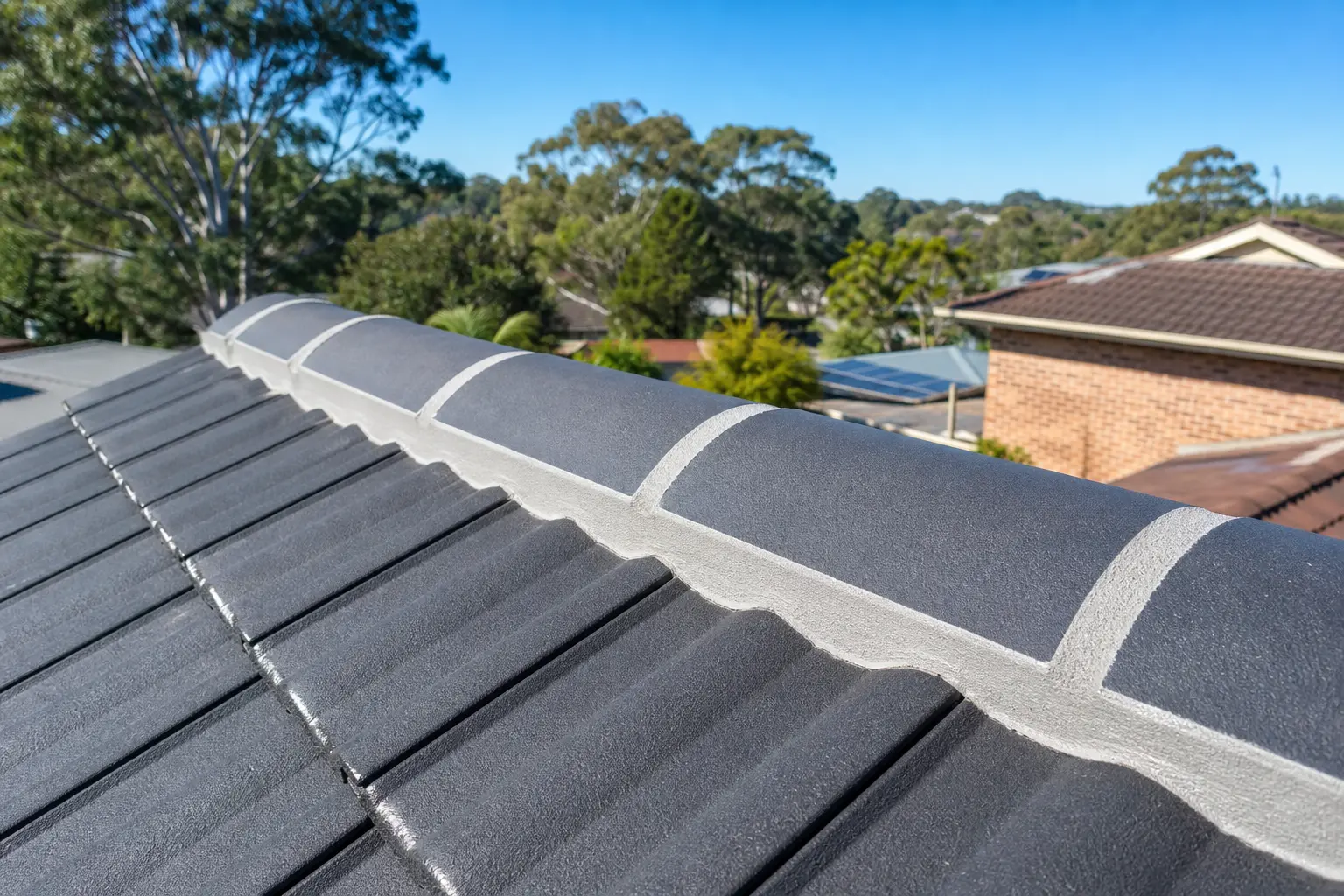
Tile roof restoration
Concrete tiles are the most common candidates for restoration. They are porous once their factory surface wears off, which is why they soak up water, grow lichen and look dull. Restoring them involves a thorough clean, replacing any broken tiles, rebedding or repointing the ridge capping, then applying a sealer and two topcoats of a roof membrane made for tiles. Terracotta is a different case. Unglazed terracotta can take a coating system when it suits the house, but glazed terracotta is usually left uncoated and restored by cleaning, tile replacement and fresh pointing alone. Where a home sits in a heritage conservation area, such as some of the historic terraces around the inner city, colour changes or coatings on original terracotta may need checking with council first. We will point out when that is likely to apply, and you confirm the controls for your address before we start.
- Concrete tiles: clean, replace broken tiles, rebed or repoint, seal and recoat
- Unglazed terracotta: coating is possible where it suits the property and any controls allow
- Glazed terracotta: usually cleaned, repaired and repointed without a coating
- Replacement tiles are matched as closely as the available stock allows; older profiles can take time to source
Metal roof restoration
A metal roof restoration targets rust, fixings and paint. We clean the roof, grind or wire brush back surface rust, apply a rust converting treatment and a metal primer, replace any roofing screws that have loosened or corroded, then apply topcoats designed for steel. Around the city and the beaches, salt carried on the wind can speed up corrosion on some roofs, particularly on sheltered areas such as under eaves overhangs and behind parapets where rain does not wash the salt off. Lakeside homes around Lake Macquarie can show similar wear on sheltered laps and gutter lines, depending on exposure. Restoration is only worthwhile while the steel is still sound. Once rust has eaten through a sheet, coating it only hides the hole, and that sheet needs replacing. We will mark any such sheets on your quote so you can decide between a partial sheet replacement plus restoration, or a full roof replacement.
Ridge capping works, rebedding and repointing
Ridge capping is the row of curved caps along the peaks and hips of a tile roof. The caps sit on a bed of mortar, and that bedding is finished with a pointing layer along each edge. Over time the sand and cement bedding cracks from heat, movement and weather, and the caps loosen. Repointing means removing the old pointing and applying a new flexible pointing compound over bedding that is still firm. Rebedding goes further: we lift the caps, remove the old mortar, lay a fresh bed and set the caps back in line before repointing. Which one you need depends on how much of the original bedding is still holding. Many roofs have a mix, with some runs solid and others loose, so the quote will spell out how many metres are being rebedded and how many repointed.
- Repointing: new flexible pointing over sound bedding
- Rebedding: caps lifted, old mortar removed, fresh bed laid, caps reset and repointed
- Gable ends, hips and valleys are checked as part of the same work
- Flexible pointing compounds move with the roof and resist cracking far better than a straight sand and cement finish
Roof preparation and coatings
A coating is only as good as the surface under it. Preparation is where a restoration is won or lost: the roof has to be clean, dry and free of loose material, broken tiles must be replaced, rust must be treated and ridges must be finished before any product goes on. On tiles we apply a sealer or primer that binds the surface, then two topcoats of a flexible roof membrane. On metal we use a primer suited to treated steel, then topcoats designed for metal roofs. Colour matters too. Lighter colours reflect more heat, which can help keep a roof space cooler in summer, while some darker colours may show fading sooner. If you want coating only, without the repairs and ridge work of a full restoration, see our roof painting page, and we will be honest if your roof needs more than paint.
Repair, restore or replace?
The honest answer depends on the condition of the roof covering and the frame beneath it. This is how we weigh it up.
| Repair | Restoration | Replacement | |
|---|---|---|---|
| Best for | One problem on a sound roof | A sound roof that is tired all over | A roof that is failing structurally or rusted through |
| Typical scope | Fix the leak, tile, sheet or flashing | Clean, repair, rebed, repoint, coat | Remove the old roof, check battens, new sarking and covering |
| Tile roof signs | A few cracked tiles, one loose ridge | Worn coating, failing pointing, lichen | Widespread breakage, rotten battens |
| Metal roof signs | One leaking screw or flashing | Surface rust, faded paint, tired fixings | Rust holes across many sheets |
| Disruption | Usually a single visit | A few working days, weather permitting | Longer, and the roof is opened up |
How the work is done
How we restore a roof
Every restoration follows the same order, so nothing gets coated before it has been repaired.
- 01
Free on-site inspection
We check the tiles or sheets, ridges, valleys, flashings, fixings and gutters, and explain what we find.
- 02
Written quote
You receive a written quote listing each task, the coating system, the colour and any items we recommend but are optional.
- 03
Clean
The roof is pressure cleaned, with gutters and downpipes cleared of the runoff and debris.
- 04
Repair
Broken tiles are replaced, rust is treated, fixings are renewed and any failed flashings are fixed or flagged.
- 05
Ridge work
Ridge and hip caps are rebedded where loose and repointed with flexible compound.
- 06
Coat
Sealer or primer, then topcoats, applied in dry conditions and allowed to cure between coats.
- 07
Final check and clean up
We walk the finished roof, check gutters are clear and clean up the site before we leave.
What the job covers
Everything included in your roof restoration
One written quote
Every item is set out in the quote you receive after inspection.
- 01
Roof inspection and written scope
We walk the roof, check the problem areas and set out every task in a written quote before any work is booked.
- 02
Cleaning and surface preparation
Pressure cleaning removes lichen, moss, grime and loose old coating so repairs and new coatings bond to a sound surface.
- 03
Broken tile and fixing replacement
Cracked tiles are replaced with matching or the closest available tiles; loose, rusted or perished metal roof fixings are swapped out.
- 04
Ridge capping rebedding and repointing
Loose ridge and hip caps are lifted, rebedded on fresh mortar and repointed with a flexible pointing compound.
- 05
Rust treatment on metal roofs
Surface rust is cleaned back and treated. Sheets rusted right through are flagged for replacement, never painted over.
- 06
Primer, sealer and topcoats
A coating system matched to the roof material, applied in the colour you choose, with the finished roof checked before we pack up.
Let's take a look
Free on-site inspection and a written quote for the work you actually need.
Straight about price
What does it cost?
Most complete tile roof restorations fall between $3,800 and $10,450, and most metal roof restorations fall between $2,850 and $5,700, according to a September 2026 Newcastle market guide from whatsthedamage.com.au (modelled estimates, not our quotes). The two ranges describe different work: tile restoration usually covers cleaning, replacing broken tiles, rebedding and repointing ridges, then recoating, while metal restoration covers cleaning, rust treatment, fixing replacement and recoating. A metal roof is not necessarily cheaper to restore than tile. Where your job lands depends on the roof's size, its pitch and access, the material, its condition, how many repairs are needed and the coating system chosen. Every roof is different, so your exact price is confirmed in writing after a free on-site inspection.
Questions before you enquire
Roof Restoration questions
Straight answers to what homeowners ask us most about roof restoration.
How long does a roof restoration last?
It depends on the roof's condition going in, the quality of the preparation and the coating system, and how exposed the house is. A well prepared restoration should protect a sound roof for many years. Keeping gutters clear and having the roof checked after major storms helps it last.
What is the difference between rebedding and repointing?
Repointing replaces only the outer pointing layer along the ridge caps, over bedding that is still firm. Rebedding means lifting the caps, removing the old mortar, laying a fresh bed and resetting the caps, then repointing. We check each run of capping and quote whichever it actually needs.
Can every tile roof be restored?
No. Tiles that are breaking across the whole roof, badly worn older tiles or rotten battens underneath can mean restoration will not last. Glazed terracotta is usually repaired and repointed but not coated. We will tell you after the inspection if replacement is the better option.
Is metal roof restoration worth it if there is some rust?
Surface rust can be treated and coated. Rust that has gone right through the steel cannot, so those sheets need replacing. If only a few sheets are affected, a partial sheet replacement combined with restoration can still be good value. If rust holes are widespread, replacement usually makes more sense.
Is restoration the same as roof painting?
No. Painting is the coating stage only. Restoration includes cleaning, repairs, ridge rebedding or repointing, rust treatment and fixings, then the coating. If you only want a recoat, our roof painting page explains when that is suitable.
My house is in a heritage area. Can the roof still be restored?
Often, yes, but some changes, such as a new colour or coating original terracotta, may need checking against the heritage controls for your property. We can explain what the work involves so you can confirm with council before we start.
Do you need to be home while the roof is restored?
Not usually. We need access to the roof and an outside tap, and we will let you know which days are coating days so windows can stay closed and cars can be moved away from the house.
Is there a warranty on roof restoration?
We offer a 10-year workmanship warranty. It covers workmanship, not materials. Coating products carry their own manufacturer terms, which we can explain when we quote.
Roof Restoration across Newcastle NSW
Servicing all Newcastle NSW suburbs including:
Related services
- Roof Repairs →Leak tracing and targeted repairs to tile and metal roofs, including storm damage and insurance reports.
- Roof Painting →Coating systems for tile and metal roofs, with honest advice on which roofs suit paint and which do not.
- Roof Cleaning →Pressure cleaning and debris removal for tile and metal roofs, as maintenance or as preparation.
- Roof Replacements →Remove a worn roof and replace it with new metal or tile, with sarking and fresh flashings.
Useful guides
Request an inspection
Ready for honest advice?
Free on-site inspection, written quote, and a straight answer: repair, restore or replace. Call (02) 4047 0860 or use the form.
GET YOUR FREE
QUOTE
Written quote after inspection. Free of charge.
- ✅ Local Team
- ✅ Written quote
🕖 Mon to Sat: 7:30am to 5:30pm
Prefer to talk? Call (02) 4047 0860